 VapeWholesaleHub
Cartomizer Temperature Exposure During Transit — Wholesale Clubs
A good cartomizer programme is boring in the best sense: same taste, same draw, same carton count, every single time. Getting there requires a shared vocabulary between you and the factory. Consider this page that vocabulary.
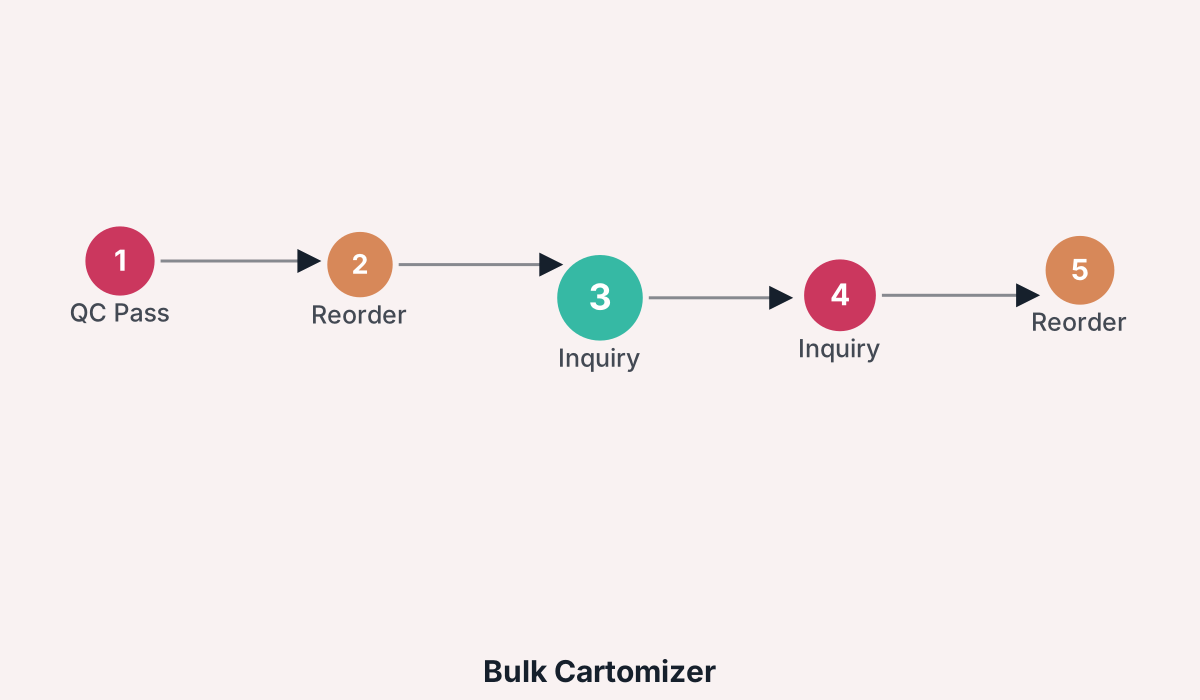
Positioning Cartomizer on Your Shelf
Category planning for cartomizer works best when you map it against three shopper types: the restocker who already knows what they want, the switcher who wants something stronger, and the explorer who buys on flavour name alone.
Before anything else, decide which customer you are buying cartomizer for. A convenience counter with limited shelf depth needs a tight range that turns quickly, while a specialist shop can carry a deeper ladder of options and educate buyers into higher ticket lines.
Pricing and Margin
Discounting cartomizer to win shelf space tends to reset customer expectations permanently. Volume support in kind, such as display material, usually costs less in the long run.
Watch the cartomizer price you pay over a year rather than per order. Factories respond well to visible volume, and a quarterly review is usually worth more than a hard negotiation each time.
Indicative reference points for planning purposes: entry tier from USD 1.78 per unit at 2000 units, mid tier at USD 1.66, and volume tier at USD 0.55 for full container quantities. These figures move with specification, packaging and freight, so treat them as a shape rather than a quote.
Trends Worth Watching
Expect cartomizer packaging requirements to keep tightening. Designs that leave room for additional labelling age better than tight layouts that need a full reprint to comply.
Reading a Cartomizer Spec Sheet
Ask any factory for the same cartomizer sample twice, three months apart. If the second sample drifts, the production line is running without statistical control and your reviews will drift with it. Consistency over time is a more useful signal than a single good sample.
| Product category | Pod system |
|---|---|
| Resistance band | 1.2 - 1.4 ohm |
| Capacity tolerance | +/- 5% |
| Puff count method | Declared by capacity |
| Master carton | 120 units |
| Carton weight | 4.0 kg |
| Shelf life | 24 months |
| Storage | 15-25 C, dry, away from direct light |
Freight, Customs and Timing
Plan the cartomizer customs paperwork at the same time as the order, not when the goods are on the water. A missing document costs more in demurrage than the entire freight saving from a cheap forwarder.
Plan the cartomizer customs paperwork at the same time as the order, not when the goods are on the water. A missing document costs more in demurrage than the entire freight saving from a cheap forwarder.
How Cartomizer Batches Are Checked
Keep a photo record of every cartomizer approval sample. Written descriptions age badly; a dated photograph next to a delivered unit settles most arguments in seconds.
The cheapest quality control step is a retained sample. Keeping three sealed units from every cartomizer batch costs almost nothing and turns any dispute into a simple comparison instead of an argument over photographs.
- Start with a mixed carton and let your own sell-through decide.
- Agree the tolerance band in writing before approving artwork.
- Plan the switch from air to sea freight before you need it.
- Ask how the factory measures puff count, then compare like with like.
- Write the complaint threshold into the order terms.
Practical Checklist
- Plan the switch from air to sea freight before you need it.
- Confirm the current customs classification with your own broker.
- Rotate stock by batch code rather than by delivery date.
- Ask how the factory measures puff count, then compare like with like.
- Keep sealed retained samples from every production batch.
- Write the complaint threshold into the order terms.
Frequently Asked Questions
Is there support for in-store material?
Yes. Shelf talkers, counter cards and simple planogram suggestions are available for cartomizer ranges that reach a sensible volume. Most retailers find the plain strength and flavour cards do the most work.
Can you match an existing product I already sell?
Often yes, provided we can measure it properly. Send a physical sample and we will report back on what can be matched, what will differ slightly, and why. An honest gap is more useful than a vague promise.
What if I only need a small first order?
That is normal and sensible. A mixed carton lets you test cartomizer in your own market before committing to a production run, and the specification you approve at that stage carries through to larger orders unchanged.
What is the usual minimum order for cartomizer?
For a standard production run the minimum is normally one master carton per flavour, though mixed cartons can be arranged for a first order. If you are testing the line, ask about a sample pack first and treat the freight as part of your research budget.
Next Step
The best cartomizer programmes we see are run by buyers who write things down. Specifications, batch records, complaint thresholds - the paperwork is the advantage.
Related Reading
- Cartomizer Barcode and Labelling Requirements — a Factory Floor View
- Cartomizer vs Standard Alternatives: What Changes for Your Shelf — First-Time Importers
- Cartomizer Batch Recall Traceability in Practice — Small Batch Buyers
- Cartomizer Planogram Basics for Wall Displays — Highly Regulated Markets
- Cartomizer Returns Data and What It Is Telling You — Highly Regulated Markets
- Cartomizer Finish Options and Perceived Quality — Mixed Cabinets