 VapeWholesaleHub
Cartomizer Staff Training Notes for Store Teams — Seasonal Demand Peaks
Everything below applies whether you are ordering one mixed carton or a full container. The numbers scale, but the logic does not change, which is the point of writing it down once.
Selling Cartomizer at Store Level
Put cartomizer where the decision is made, not where the margin is highest. In most stores that means near the counter or at eye level in the category, rather than wherever there is spare space.
Where Cartomizer Sits in the Range
Think about where cartomizer sits in your customer's week. If it is a weekly restock, breadth matters less than availability. If it is an occasional treat, flavour range and display story carry more weight.
Range decisions for cartomizer should start from shelf space, not from a supplier catalogue. Count the facings you actually have, then decide how many of them this line deserves against what it currently earns.
Market Signals
Expect cartomizer packaging requirements to keep tightening. Designs that leave room for additional labelling age better than tight layouts that need a full reprint to comply.
The most durable cartomizer lines over the last few years have been unglamorous and consistent. Novelty sells once; reliability sells every month.
Reading a Cartomizer Spec Sheet
A written cartomizer specification should be short enough to read in a minute and precise enough to argue about. If a factory cannot confirm a number in writing, assume the number is whatever is cheapest that week.
| Product category | Accessory |
|---|---|
| Resistance band | 1.0 - 1.2 ohm |
| Capacity tolerance | +/- 5% |
| Puff count method | Declared by capacity |
| Master carton | 300 units |
| Carton weight | 7.9 kg |
| Shelf life | 12 months |
| Storage | 15-25 C, dry, away from direct light |
Pricing and Margin
The cheapest cartomizer quote is rarely the cheapest outcome. Add freight, defect handling, delay risk and the staff time spent chasing, then compare again. The ranking often changes.
Watch the cartomizer price you pay over a year rather than per order. Factories respond well to visible volume, and a quarterly review is usually worth more than a hard negotiation each time.
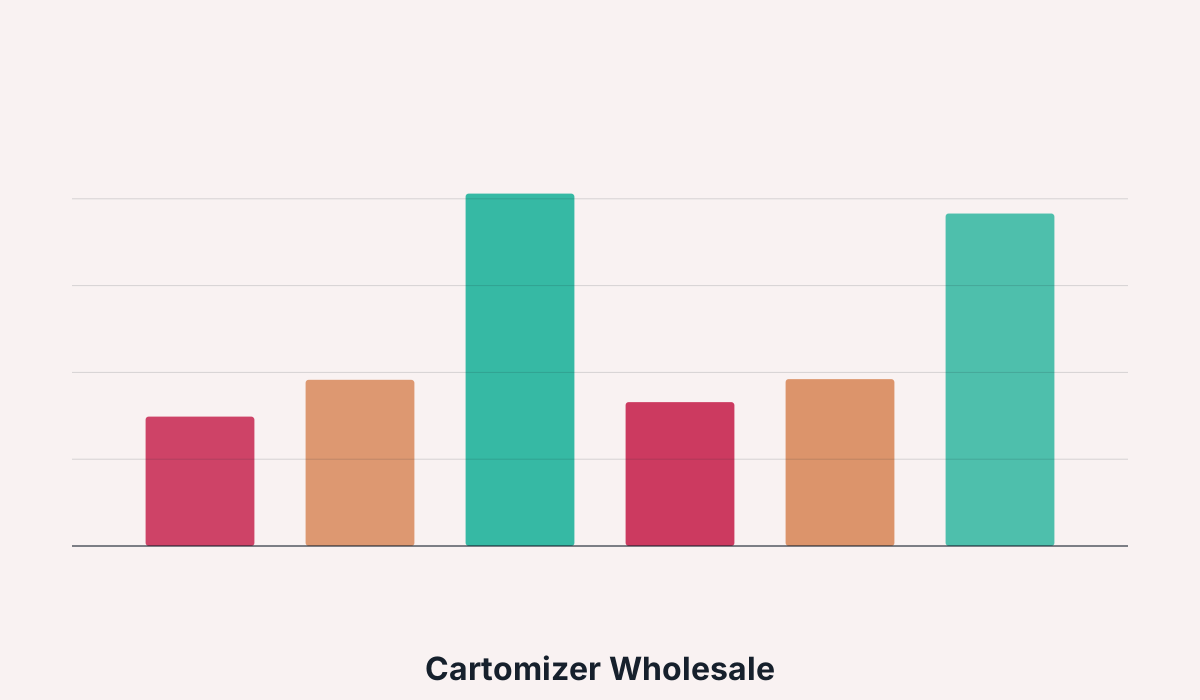
Indicative reference points for planning purposes: entry tier from USD 1.52 per unit at 1000 units, mid tier at USD 1.83, and volume tier at USD 1.27 for full container quantities. These figures move with specification, packaging and freight, so treat them as a shape rather than a quote.
How Cartomizer Batches Are Checked
Train whoever receives cartomizer cartons to note anything unusual at the point of unloading. Damage discovered at the dock is a freight claim; damage discovered a week later is your problem.
Inspection is only useful if the result is recorded somewhere you can find it later. A cartomizer batch log with weights, codes and measurements turns a future complaint into a five minute lookup.
- Agree the tolerance band in writing before approving artwork.
- Confirm the current customs classification with your own broker.
- Plan the switch from air to sea freight before you need it.
- Start with a mixed carton and let your own sell-through decide.
- Rotate stock by batch code rather than by delivery date.

Practical Checklist
- Ask how the factory measures puff count, then compare like with like.
- Check carton dimensions against your freight quote before confirming.
- Rotate stock by batch code rather than by delivery date.
- Plan the switch from air to sea freight before you need it.
- Model landed cost, not ex-works price, when comparing quotes.
- Start with a mixed carton and let your own sell-through decide.
Frequently Asked Questions
What happens if my market changes its rules?
Regulations move, and packaging or documentation sometimes has to follow. We keep approved artwork files on hand so that a required change is a reprint rather than a redesign, which keeps the cost and delay down.
How long does a cartomizer order take to arrive?
Production typically takes ten to eighteen working days after artwork approval, and transit depends on the method you choose. Air express is fastest, sea freight is cheapest at volume. We confirm both at quotation so there is no surprise later.
What information do you need to quote?
Target specification, approximate quantity, destination and any packaging requirement. With those four we can usually come back with a costed option the same working day rather than a request for more information.
Can I visit the production facility?
Yes, and we encourage it for larger programmes. Visits are most useful when you already have a draft specification, because you can then check the specific processes behind the numbers you care about.
Next Step
Questions that are not answered here are usually the interesting ones. Reach out with the specifics of your market and we will answer with numbers rather than adjectives.
Related Reading
- Cartomizer Growing From Pallet to Container — Convenience Retail
- Cartomizer Retail Price Architecture Across Channels — Small Batch Buyers
- Cartomizer Nicotine Strength Selection for Mixed Cabinets — Latin America
- Cartomizer First Order Playbook for New Importers — Regional Distributors
- Cartomizer KPI Set for Wholesale Operations — Tight Margin Categories
- Cartomizer Sample Approval Meeting Agenda — Established Chains